
Quick answer
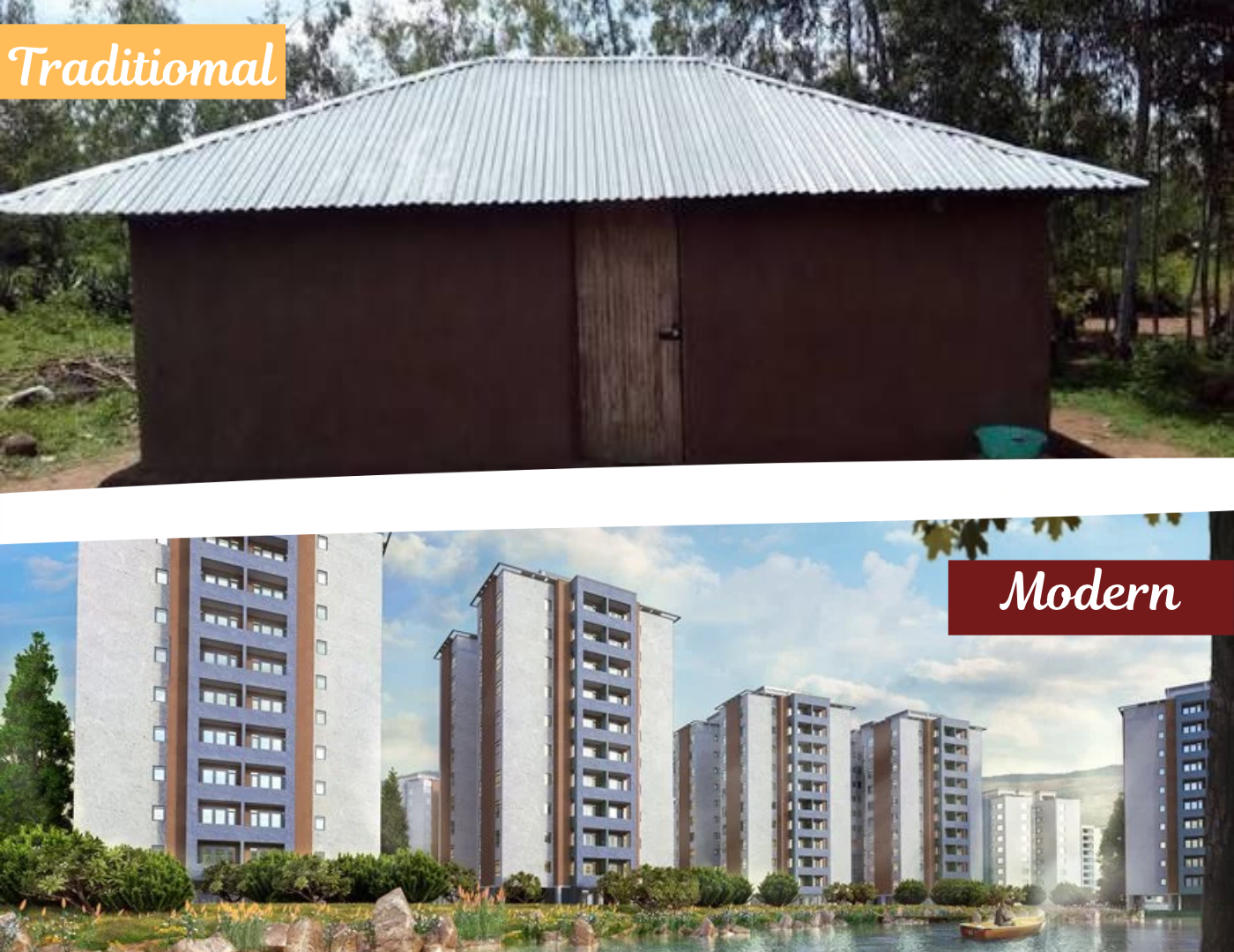
Kenyan residential architecture is not one style: it is a continuing conversation between diverse indigenous traditions, Swahili urbanism, colonial planning, post-independence estates and today's denser developments.
Many communities, many ways of making a home
Kenya's earliest residential traditions were shaped by local climate, available materials and social organisation. Pastoral homes needed to support mobility and livestock; farming homesteads often arranged separate structures around family and food production. Earth, timber, grass, reeds and dung were practical materials with repair knowledge held in the community.
It is misleading to describe one traditional Kenyan house. A Maasai enkaji, a Luo dala and a Kikuyu homestead answered different environmental and cultural needs. Their layouts expressed family relationships, work, ceremony and security as much as shelter.
The Swahili coast and the rise of stone houses
Along the coast, Swahili settlements developed a distinctive building culture through African, Indian Ocean and Islamic exchange. Coral-stone walls, shaded courtyards, narrow streets, carved doors and carefully managed water helped homes respond to heat, privacy and dense town life. Lamu Old Town preserves an exceptional record of this tradition.
Swahili architecture should not be reduced to a foreign import. Scholarship increasingly emphasises local agency and the way coastal communities adapted ideas and materials over centuries. It remains one of East Africa's most important urban architectural traditions.
From colonial suburbs to estates, apartments and gated communities
Colonial Nairobi imposed racially divided housing patterns, with low-density garden suburbs, commercial districts and under-resourced African housing areas. Planned estates including Kaloleni later influenced public housing. After independence, government and private development expanded estates across Nairobi while rectangular masonry homes with corrugated or tiled roofs became increasingly common across the country.
Urban growth and expensive land have since pushed housing upward. Apartments now dominate many central and satellite neighbourhoods, while gated communities package shared security, roads and amenities. Yet good design still depends on the oldest principles: ventilation, daylight, drainage, durable materials and a layout suited to the household. Buyers should judge those qualities rather than style alone.
- Look for cross-ventilation and usable natural light.
- Check drainage, roof detailing and the condition of exterior finishes.
- In apartments, assess water storage, lifts, backup power and management.
- In gated communities, understand service charges and shared-area obligations.
Frequently asked questions
- What influenced traditional Kenyan house design?
- Climate, locally available materials, livelihood, family structure and security all influenced design. Because Kenya has many communities and environments, its traditional homes vary widely.
- What makes Swahili architecture distinctive?
- Common features include coral-stone construction, internal courtyards, carved doors, shaded spaces and layouts shaped by privacy, climate and centuries of Indian Ocean exchange.
- Why are gated communities growing in Kenya?
- They respond to demand for managed security, shared infrastructure and predictable amenities, especially where buyers want more space beyond dense urban centres.
Sources & further reading
Written by Jayhenrys Homes Research Desk
About Jayhenrys Homes
Jayhenrys Homes is a Nairobi real-estate agency based in Garden Estate. We help buyers, tenants and investors compare homes, view properties and work through the buying or renting process across Nairobi and Kiambu. Have a question about this guide? Call +254 792 999888 or send us a message.