
Quick answer
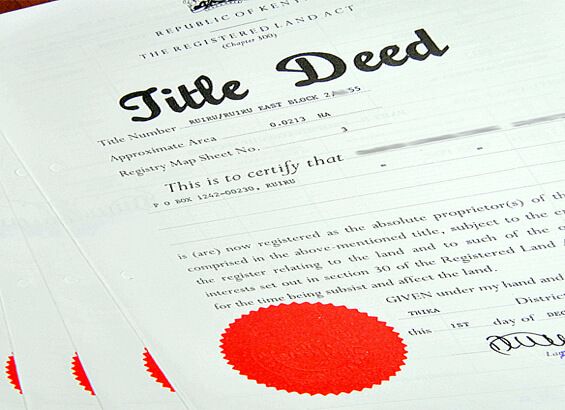
To verify a title deed in Kenya, run an official land search on Ardhisasa or at the registry using the title number, confirm the registered owner matches the seller's ID, check for caveats, charges and cautions, then obtain land rates and land rent clearance certificates before paying anything.
Step 1 — Get the title details in writing
Ask the seller for a copy of the title deed and their national ID or company registration documents. Record the title number, the registry it sits in, and the exact registered proprietor's name. Any hesitation at this stage is itself information.
Step 2 — Run an official search
Conduct the search through Ardhisasa or the relevant land registry. The certificate of official search shows the registered owner, the size and tenure of the parcel, and any encumbrances — charges from banks, caveats, cautions or court restrictions.
A clean search that is more than a few weeks old is not enough. Repeat the search immediately before completion, because a caveat can be lodged at any time.
- Owner's name must match the seller's ID exactly.
- Tenure: freehold or leasehold, and the unexpired term.
- Encumbrances section must be clear, or the charge must be discharged at completion.
Step 3 — Verify on the ground
Commission a licensed surveyor to confirm beacons against the registry index map, and physically visit the parcel. Ask neighbours and the local administration whether ownership is disputed or the land is subject to a succession case.
Finally, obtain land rates clearance from the county and land rent clearance where the parcel is leasehold. Transfers stall for months when these are outstanding.
Frequently asked questions
- How do I do a land search in Kenya?
- Register on Ardhisasa or visit the relevant land registry, submit the title number and pay the prescribed search fee. You receive a certificate of official search showing the registered owner, parcel details and any encumbrances.
- How long does a land search take in Kenya?
- An online search on Ardhisasa is typically returned within a few working days; manual registry searches can take longer depending on the registry and whether the file is digitised.
- What is a caveat on a title deed?
- A caveat is a formal notice lodged by a third party claiming an interest in the land. It blocks registration of a transfer until it is removed, so never pay a deposit on a parcel with an active caveat.
Sources & further reading
Written by Jayhenrys Homes Research Desk
About Jayhenrys Homes
Jayhenrys Homes is a Nairobi real-estate agency based in Garden Estate. We help buyers, tenants and investors compare homes, view properties and work through the buying or renting process across Nairobi and Kiambu. Have a question about this guide? Call +254 792 999888 or send us a message.